
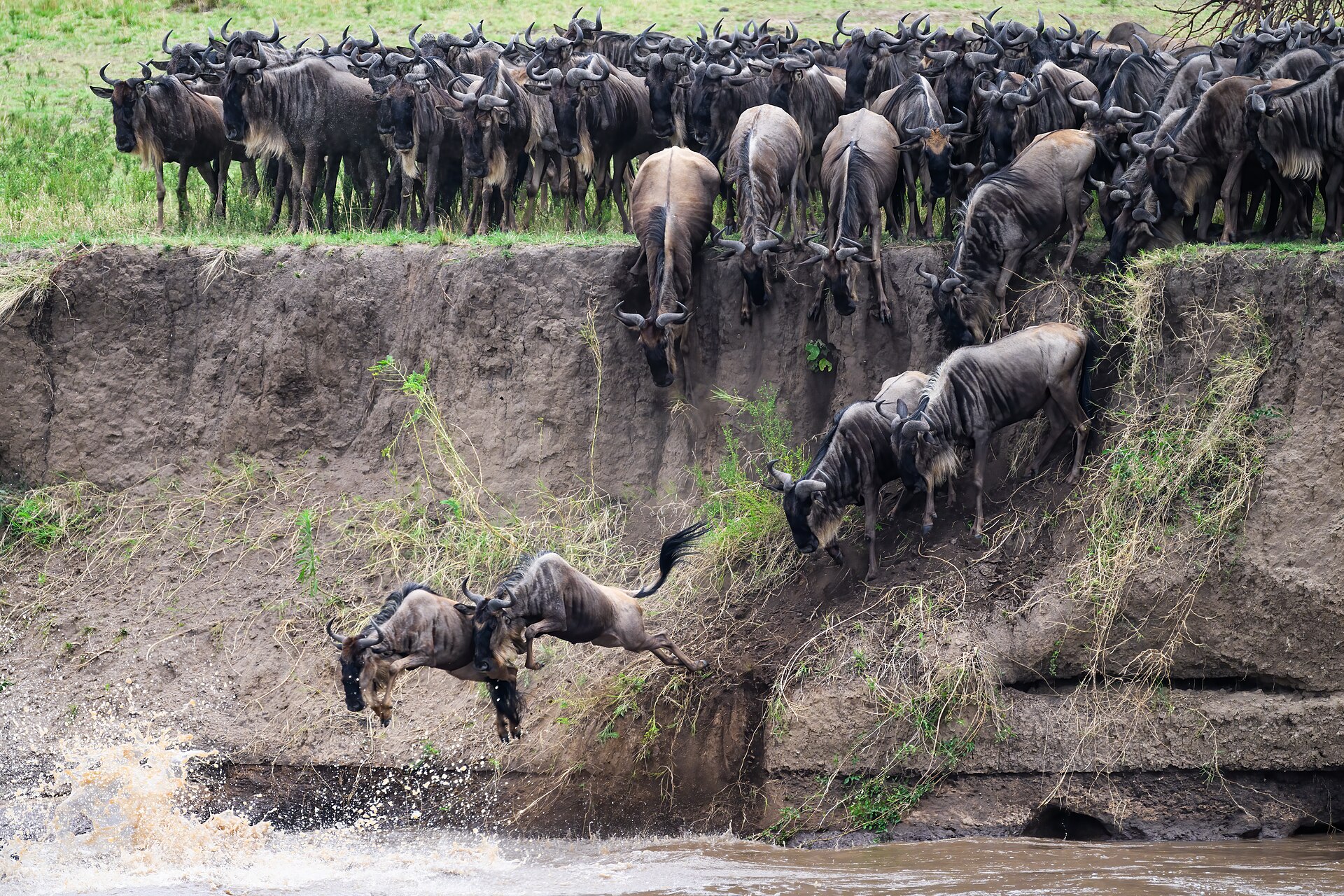
A Mara River crossing is unforgettable, but it is not a scheduled performance. The most important preparation is understanding how much waiting, uncertainty and restraint sit behind the few dramatic minutes seen in photographs.
Timing is a window, not a date
Herd movements depend on rain and grazing. Broad seasonal patterns help with planning, but no lodge or guide can guarantee a crossing on a specific day. Stay several nights in the relevant migration area and treat every other wildlife sighting as part of the safari, not as filler.
Waiting is the experience
Vehicles may hold for hours while wildebeest approach, retreat and gather again. A herd can disappear from the bank without crossing. Bring water, sun protection, patience and something quiet to do, and listen to your guide when movement around the river could disturb the animals.
Crowds require good judgment
Popular crossing points can attract many vehicles. Responsible guides keep legal distances, avoid blocking routes and position without pressuring animals. A farther view with ethical behavior is better than a close view created by chaos.
What the camera does not show
Dust, steep banks, noise and difficult outcomes are part of a crossing. Watch with respect and avoid treating distress as entertainment. Use a moderate shutter speed for motion, but remember to lower the camera and take in the scale of the event.
Build the trip around the Mara ecosystem rather than one moment. Big cats, elephants, plains game, birds and changing light can make every drive worthwhile, whether the herds cross or not.